
Not a book about investing. A system for thinking
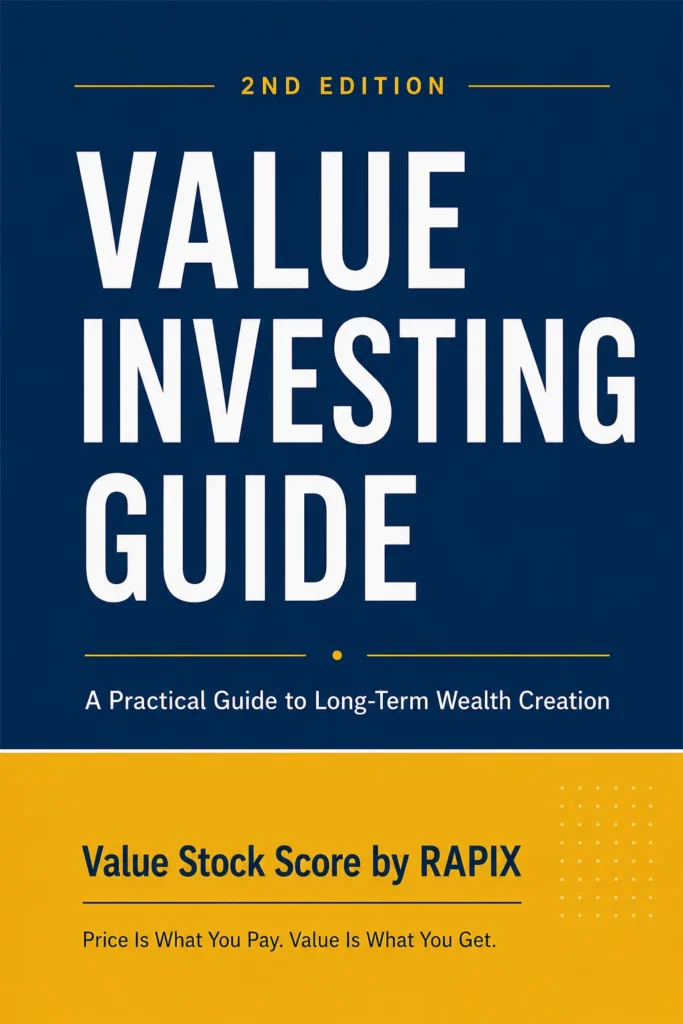
6 chapters. 6 mental models. One complete framework for buying businesses — not tickers. Stop guessing. Start owning
80% of individual investors underperform the market. Not because they’re unlucky — because they don’t have a system
Who This Book Is For
Not everyone needs the same thing from an investing book. Whether you’re taking your first step or refining a decade of experience, this book meets you where you are
| You are... | This book gives you... |
|---|---|
| A beginner who doesn't know where to start | A complete system — no prior knowledge needed |
| An experienced investor who already knows the basics | Discipline, structure, and the gaps you didn't know you had |
| A self-taught investor with scattered knowledge | A coherent framework that connects everything |
| A Graham fan who loves quantitative analysis | A modernized, practical version of Graham's approach |
| A Buffett follower who focuses on quality | A systematic way to identify moats and calculate intrinsic value |
The Problem
Most investors lose money not because they’re unlucky — but because they don’t have a system
People buy stocks because someone on TV said so. They sell in a panic when the price drops 10%. They chase hot tips, momentum, and “the next Tesla.” They confuse a rising price with a good investment.
The result? They buy high, sell low, and wonder why the market always seems to work against them.
The problem isn’t intelligence. It’s the absence of a system
The Solution
This book gives you a system
Not opinions. Not predictions. Not “10 stocks to buy now.”
A repeatable, mechanical framework for:
– Separating price from value
– Identifying businesses that will survive for decades
– Calculating what a company is actually worth
– Knowing exactly when to buy — and when to walk away
– Controlling your emotions when the market is screaming at you
By the time you finish Chapter 6, you will have a complete investment operating system — the same framework used by Graham, Buffett, and Klarman
What is value investing? It’s a strategy of buying stocks for less than they’re worth. You calculate what a company is actually worth (intrinsic value) and only buy when the price is significantly below that number.
Is it still relevant? Yes. Value investing has been declared dead in every bull market for 50 years — and it has always come back. The tools evolved, but the principle remains: buy below intrinsic value
Why This Book Is Different
There are hundreds of investing books. Most repeat the same advice. This one was built differently — because it was built from practice, not theory
There are hundreds of books about investing. Here’s why this one is different:
It’s not theory — it’s a toolkit. Every chapter ends with a practical checklist you can apply immediately. No fluff, no filler, no 50-page digressions into academic history.
It’s not about getting rich quick. It’s about building wealth over decades. The system is designed for people who have better things to do than watch CNBC all day.
It synthesizes Graham AND Buffett. Most books pick a side. This one shows you when to use Graham’s quantitative approach and when to use Buffett’s qualitative approach — and how to combine them.
It’s written by a practitioner. The author runs Value Stock Score — a platform that applies these exact principles to real S&P 500 data every single day. This isn’t theory from an academic. It’s a system that’s being used in production
What the Masters Say
“The intelligent investor is a realist who sells to optimists and buys from pessimists.” — Benjamin Graham, The Intelligent Investor, Chapter 8
“Price is what you pay. Value is what you get.” — Benjamin Graham
“In business, I look for economic castles protected by unbreachable moats.” — Warren Buffett
“Value investing is at its core the marriage of a contrarian streak and a calculator.” — Seth Klarman, Margin of Safety
“It’s far better to buy a wonderful company at a fair price than a fair company at a wonderful price.” — Warren Buffett
“The stock market is a voting machine in the short run and a weighing machine in the long run.” — Benjamin Graham, Security Analysis
How to Get the Book
The book is available two ways. Premium subscribers get it free as part of their membership. Everyone else can buy it standalone — instant download, no subscription required
Option A: Free with your Premium subscription
Get the book + full Premium access to Value Stock Score Platform
Premium subscription ($30/month or $300/year) includes:
– The complete book (PDF)
– Graham Score for all S&P 500 tickers
– DCF valuation and Margin of Safety analysis
– Private Telegram group access
– Personal watchlist with unlimited tickers
– And much more
Option B: Standalone Purchase
Buy the book for 25 $
Instant download. No subscription required. No DRM
What's Inside — The 6 Chapters
Each chapter builds on the previous one. Start with the mindset, learn the tools, and finish with a complete system you can apply to any stock, in any market
“The intelligent investor is a realist who sells to optimists and buys from pessimists.” — Benjamin Graham
The single most expensive mistake an investor can make is confusing price with value. This chapter introduces Mr. Market — your manic-depressive business partner who offers you a price every day. Some days he’s euphoric and offers absurdly high prices. Other days he’s panicked and offers absurdly low ones. Your job is not to follow his mood — it’s to take advantage of it.
You’ll learn:
– The Great Divide: why price and value are not the same thing
– Graham vs. Buffett — two schools of value investing and which one suits you
– The 1929 crash and what it teaches us about market psychology
– Why the Efficient Market Hypothesis is demonstrably false
– Checklist: The 5 questions to ask before every purchase
“In business, I look for economic castles protected by unbreachable moats.” — Warren Buffett
Profit attracts competition. Competition destroys profit. This is the iron law of capitalism. The only way to escape it is to own businesses with durable competitive advantages — moats.
You’ll learn:
– The Moat Test: 3 questions that reveal whether a business can survive
– The 4 types of moats: intangible assets, switching costs, network effects, cost advantages
– How to measure moat strength — and spot when it’s eroding
– Real examples: Coca-Cola’s brand premium, Microsoft’s switching costs, Visa’s network effects
– Checklist: The Moat Audit — score any business on 5 dimensions
“Price is what you pay. Value is what you get.” — Benjamin Graham
Multiples — P/E, EV/EBITDA, P/B — tell you what other people are paying. They don’t tell you what a business is worth. This chapter gives you the tools to calculate intrinsic value yourself.
You’ll learn:
– Why DCF is the only valuation method that matters
– Free Cash Flow: the right numerator (and why net income and EBITDA are wrong)
– The FCF Conversion Ratio — a quick test of earnings quality
– Step-by-step DCF: growth rates, discount rates, terminal value
– Graham Number and Owner Earnings — simpler alternatives
– Checklist: The 10 inputs every DCF needs
“Value investing is at its core the marriage of a contrarian streak and a calculator.” — Seth Klarman
Buying at fair value is a bet that your analysis is perfect. It never is. The margin of safety is the difference between the price you pay and what the business is worth — and it’s the only thing that protects you from being wrong.
You’ll learn:
– The “fair value trap” — why buying at intrinsic value is dangerous
– How much margin of safety you need (it depends on the business type)
– The Entry Price Formula: set your price before looking at the market
– When to buy, when to hold, and when to walk away
– Checklist: The 6-tier margin of safety system
“It’s far better to buy a wonderful company at a fair price than a fair company at a wonderful price.” — Warren Buffett
There are 45,000 publicly traded companies. You can deeply analyze maybe 50 per year. You need a system to find the 0.2% that deserve your time.
You’ll learn:
– The Score System: 10 criteria to rank any stock in minutes
– Management quality — the first and most important filter
– Financial health: debt, liquidity, and the Altman Z-Score
– The 7 Defensive Criteria from Benjamin Graham
– Checklist: The Quality Filter — 12 gates every stock must pass
“The stock does not know you own it.”
Value investing is intellectually simple and psychologically almost impossible. The rules are straightforward. The emotions are brutal.
You’ll learn:
– The 4 psychological traps: FOMO, loss aversion, anchoring, action bias
– The Identity Shift: from trader to business owner
– Why doing nothing is a legitimate investment decision
– How to build a watchlist that keeps you disciplined
– Checklist: The 10 rules for maintaining your temperament
Formats
The complete book in a single PDF file — ready to read on any device. No DRM, no restrictions
| Format | Best for |
|---|---|
| Reading on your computer or tablet |
Read the Sample
Not sure yet? Read the extract — no email required
FAQ
Everything you need to know about the book. If you don’t see your question here, feel free to contact us
What is value investing?
Value investing is a strategy of buying stocks for less than they’re worth. Instead of chasing hot tips or momentum, you calculate what a company is actually worth (intrinsic value) and only buy when the price is significantly below that number. This book teaches you exactly how to do that — step by step.
Is this book for beginners?
Yes. The first chapter assumes you know nothing about investing. By Chapter 6, you’ll have a complete system for analyzing stocks. Experienced investors will also find value — the checklists and mental models fill gaps that most self-taught investors don’t know they have.
Do I need a subscription to read the book?
No. You can buy the book standalone for $25 — instant PDF download, no subscription required. But if you’re a Premium subscriber ($30/mo), the book is included at no extra cost, along with Graham Score, DCF analysis, and Telegram group access.
How long is the book?
Approximately 200 pages across 6 chapters, plus practical checklists and reference tables at the end of each chapter. It’s designed to be read in a weekend and referenced for a lifetime.
What format is the book in?
PDF. Read it on your computer, tablet, or phone. No DRM, no restrictions — you own it.
I’m already a Premium subscriber — how do I download the book?
Go to your Book Access page, enter your access code (sent to your email when you subscribed), and download the PDF. If you didn’t receive your code, use the “Resend Code” option on the same page.
Is value investing still relevant in 2026?
Yes. Value investing has been declared dead in every bull market for the past 50 years — and it has always come back. The tools have evolved (modern metrics like ROIC and FCF yield), but the core principle remains: buy below intrinsic value. This book teaches both the timeless principles and the modern tools.